
A few weeks ago, John Hickey stepped into the CEO role at Renvio with a clear first priority: listen before acting.
In Part 1 of this series, John shared what drew him to Renvio, what he noticed first about the people and the work, and why his first 30 days would start with listening. In Part 2, that listening moved beyond first impressions and into the field, with customer conversations helping shape how John is thinking about the renal care community Renvio serves.
Now, just days after his one-month mark, that plan is well on track. John has spent his first weeks getting closer to the team, customers, partners, and renal care leaders who understand the work best. Those conversations have helped turn early impressions into clearer areas of focus and set the stage for what comes next.
In this final installment, the conversation turns toward the work ahead: how listening becomes action, how focus becomes discipline, and how Renvio will continue sharing progress with customers, partners, and the broader community.
John is not using this moment to announce a sweeping new strategy. Instead, he is focused on building with intention, communicating clearly, and making sure the people Renvio serves understand where the company is headed.
The goal is to give the renal care community a clear view of what Renvio is working toward, the resources and support available to them, and the role the company hopes to play in the days ahead.
Q: As you move from first impressions to focused action, how are you thinking about Renvio’s role in the market?
JH: Renvio’s role starts with being honest about what renal care organizations actually need from a technology partner right now, and building toward it deliberately.
A few things are clear to me after 30 days.
First, the AI landscape is moving fast and our customers are watching it closely. Our job is not to chase every AI capability that exists, but to study what is ready, pick the tools and models that solve real clinical and operational problems, and ship them. Physician note generation that saves time in the chair. Anemia management tools that reduce ESA spend. Hospitalization models that give nurses earlier warning.
Second, the friction between systems is a daily problem in dialysis clinics. Data living in different places, manual steps between clinical documentation and billing, integration gaps that cost staff time every shift. Making that interface layer more effortless, so that data flows without someone chasing it, is one of the most practical things we can do for the people running these clinics.
Third, billing and AR are not secondary to the clinical product. They are inseparable from it. Building enterprise-grade billing and AR capabilities that give operators real financial visibility, reduce days in AR, and handle the complexity of renal reimbursement without constant manual intervention, that is where we earn the right to be called a platform rather than a collection of tools.
The opportunity is not to be broader. It is to go deeper in the areas that matter most to the people who depend on us every day.
Q: What excites you most about the opportunity ahead?
JH: What excites me is that we are not starting from scratch.
Renvio has a strong foundation, a team that understands this market, and customers who trust us with important work. The job now is to take what is already strong and build on it deliberately.
We are studying what is actually ready in AI, picking the tools that solve problems clinicians and operators face every day, and building toward it with discipline. That work is happening now and there is a lot more ground to cover.
Partner interoperability matters too. There are too many disconnected systems in a dialysis clinic, too many manual steps between clinical documentation, billing, and operations. Closing those gaps gives staff time back on every shift.
Then there is the broader kidney practice management picture. Compliance, value-based care, legislation changes, care plans, medication management, mineral metabolism, QAPI. These are not peripheral concerns for our customers. They are central to how a well-run kidney practice operates. Building technology that helps the whole practice manage those demands more confidently, not just the clinical documentation piece, is where Renvio has an important role to play.
And globally, renal care is a growing challenge. We are already active in international markets and serious about growing our presence in the global renal care community. The opportunity to bring what we are building here to kidney care providers around the world is something I take seriously.
We have what we need to do this. The job now is to put it to work in the right order.
Q: As this series concludes, what should customers and the renal care community expect from Renvio next?
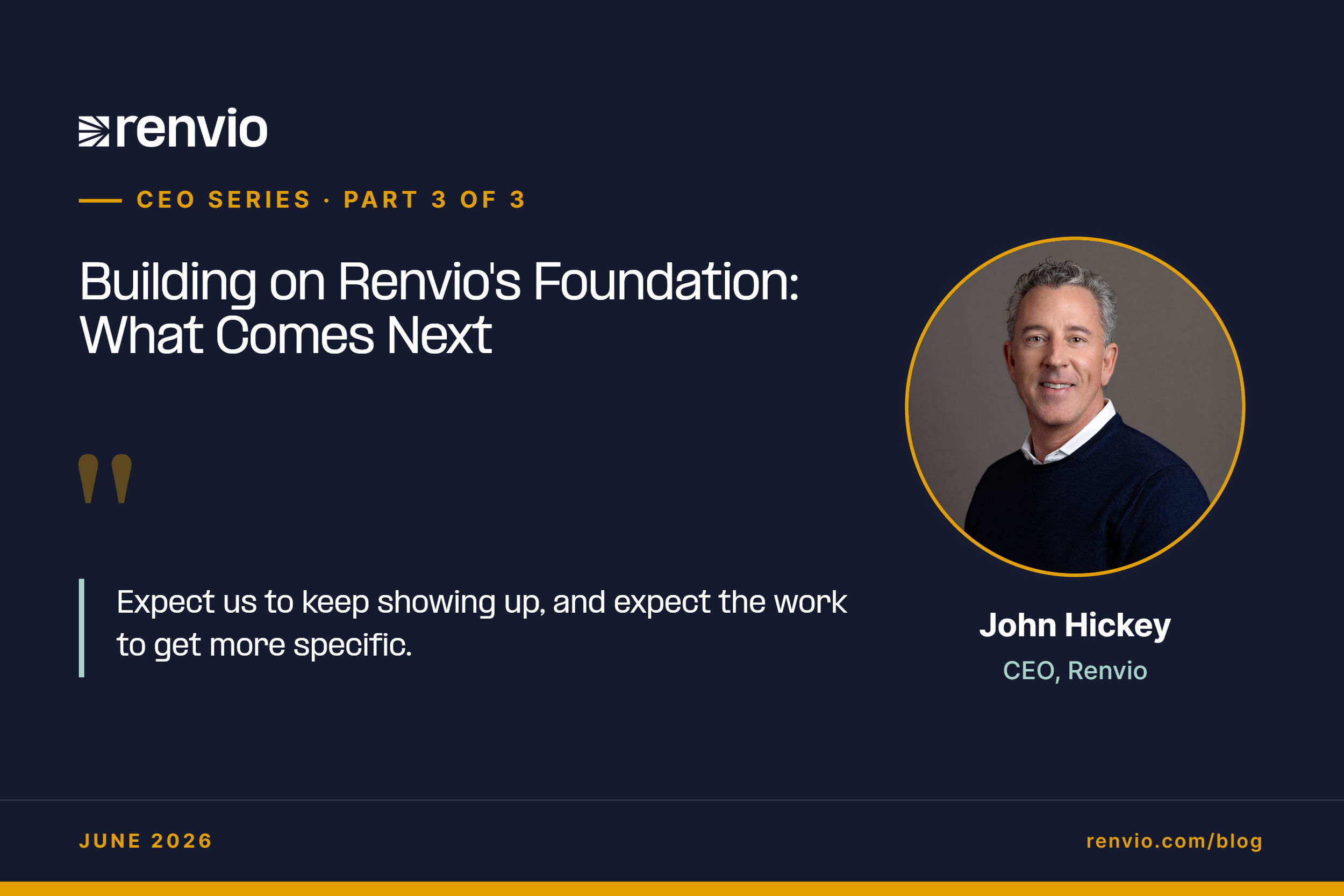
JH: Expect us to keep showing up, and expect the work to get more specific.
What I heard in this first month was consistent across every conversation. People want a partner who is present, who communicates clearly, and who does what they say they are going to do. That sounds basic. In practice it is harder than it looks, and it is where trust gets built or lost.
So that is where we start. More consistency in how we communicate progress. Faster responses when something goes wrong. Clearer ownership of problems until they are resolved. A product roadmap that reflects what customers actually need, not just what is easiest to build.
Beyond the day-to-day, I want the renal care community to see Renvio as a company that is investing in this space for the long term. That means staying close to the clinical and regulatory changes that affect how kidney practices operate. It means being a resource, not just a vendor. And it means building toward a future where the technology we provide makes a measurable difference in the quality of care that patients receive.
That is what I want people to expect from us, and it is what I intend to deliver.
John and the Renvio team will continue sharing practical updates, industry perspectives, and lessons from the renal care community on LinkedIn.
Follow along for insights on AI, interoperability, billing, regulatory changes, and the work ahead as Renvio continues turning focus into action.