Curious about how AI is being used to empower dialysis care?
Join Our Upcoming Presentation
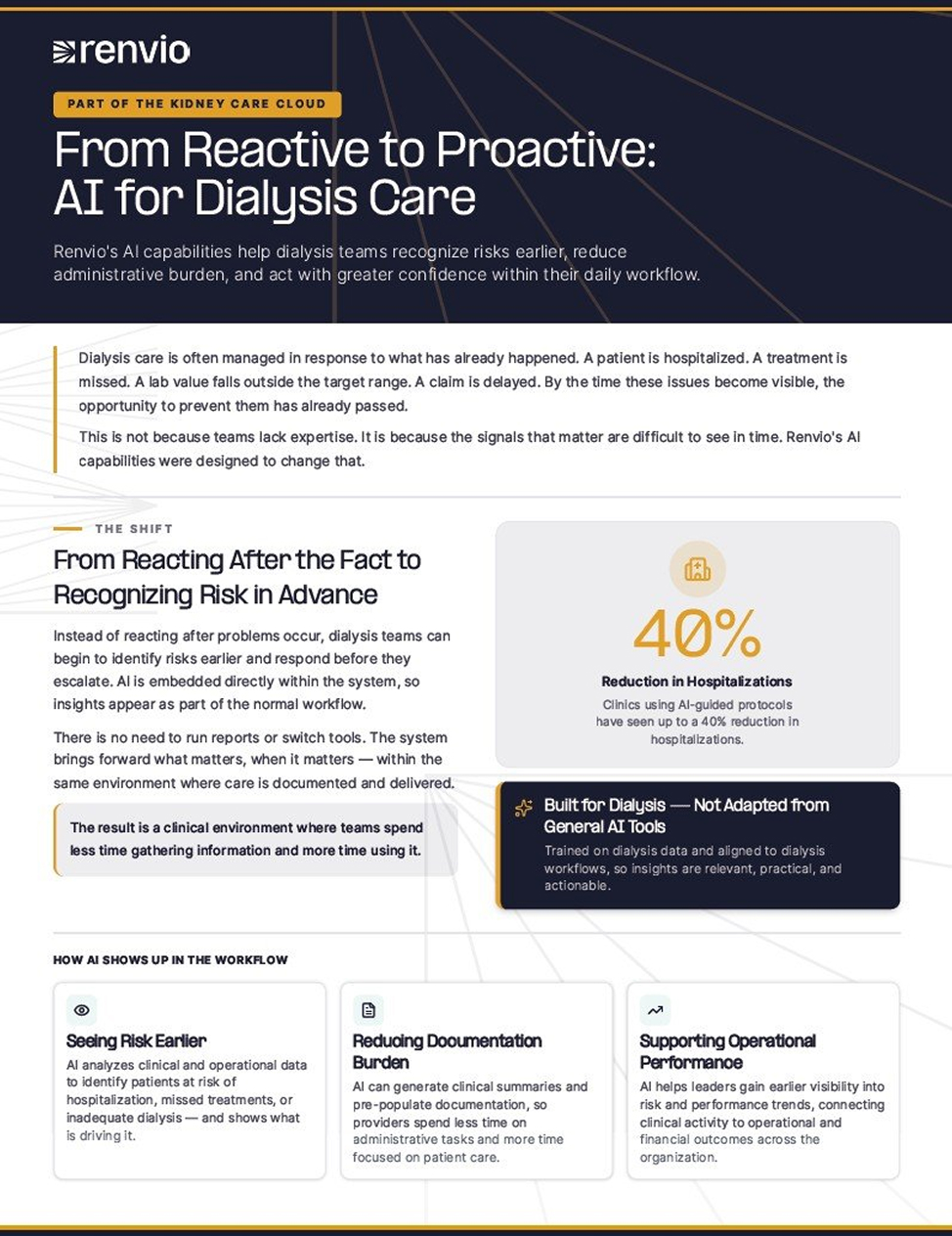
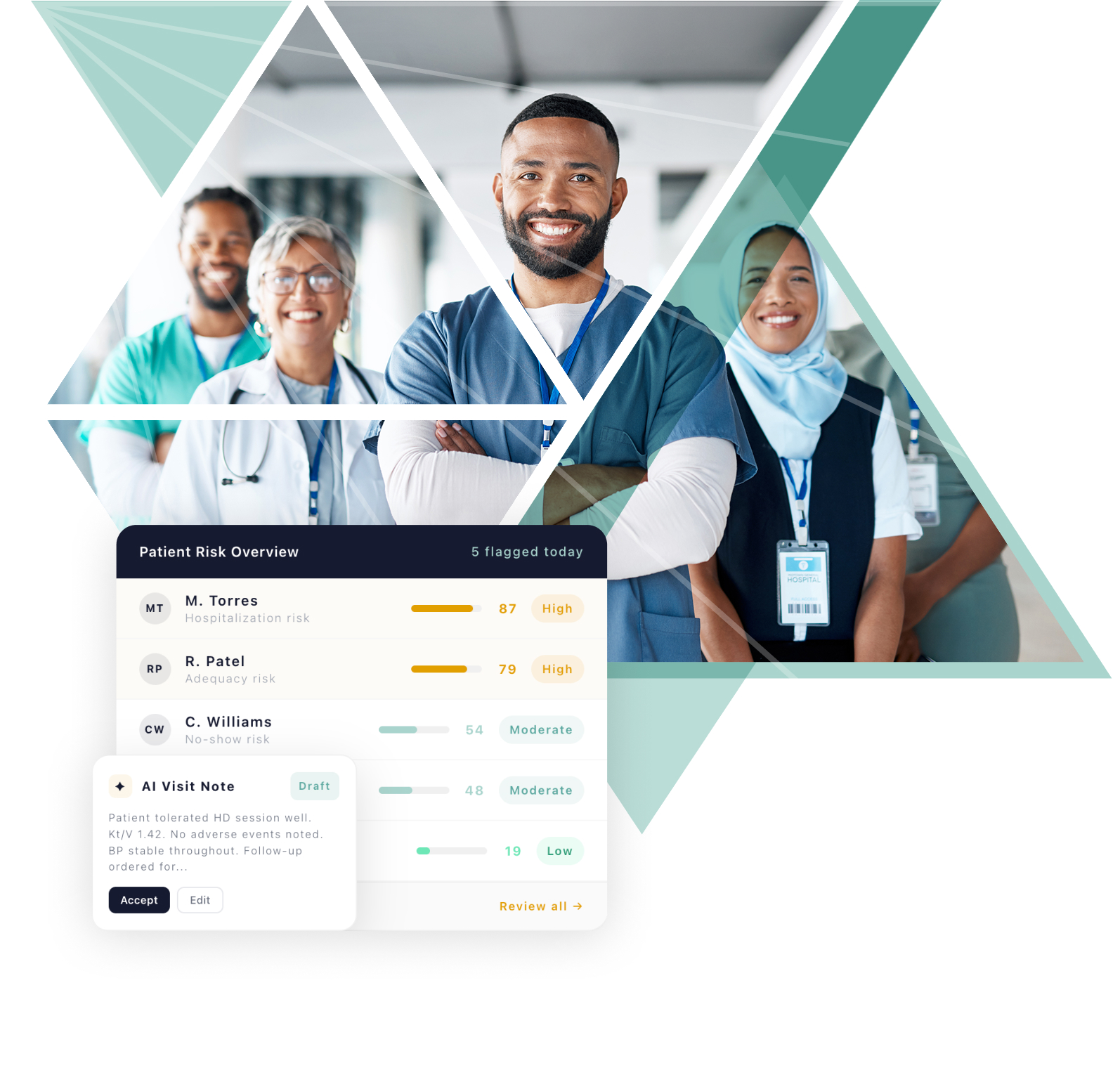
Renvio’s AI capabilities help dialysis teams identify risk earlier, reduce documentation burden, and access critical information faster, all within the workflow they already use.
This means less time chasing information, and more time for acting on it.
In a busy clinic, it can be difficult to catch issues before they become bigger problems. Risks like hospitalization, missed treatments, slipping adequacy, and incomplete documentation are not signs that teams are not paying attention.
They are the result of working to stay ahead in an environment that rarely slows down.
Renvio’s AI capabilities are built to help you get ahead, and have more confidence in your operations. Instead of adding another disconnected tool or another report to review, these capabilities bring forward what matters while staying within your normal EMR workflow.

Renvio’s AI-powered capabilities are designed to help dialysis organizations move from reacting after problems occur to recognizing risk and reducing burden. They enable care teams to act sooner within the same environment where care is documented and delivered.
These videos offer a look at a few of Renvio’s AI capabilities in action. To see more and explore how these capabilities fit into your workflow, schedule time with our sales team for a personalized demo.
These capabilities are embedded directly inside Dialysis Manager, so teams do not have to jump between disconnected tools to access insights, document care, or take action.
Renvio’s AI capabilities are designed specifically for dialysis care, aligned to dialysis workflows so the outputs are practical, relevant, and usable in the real world of the clinic.
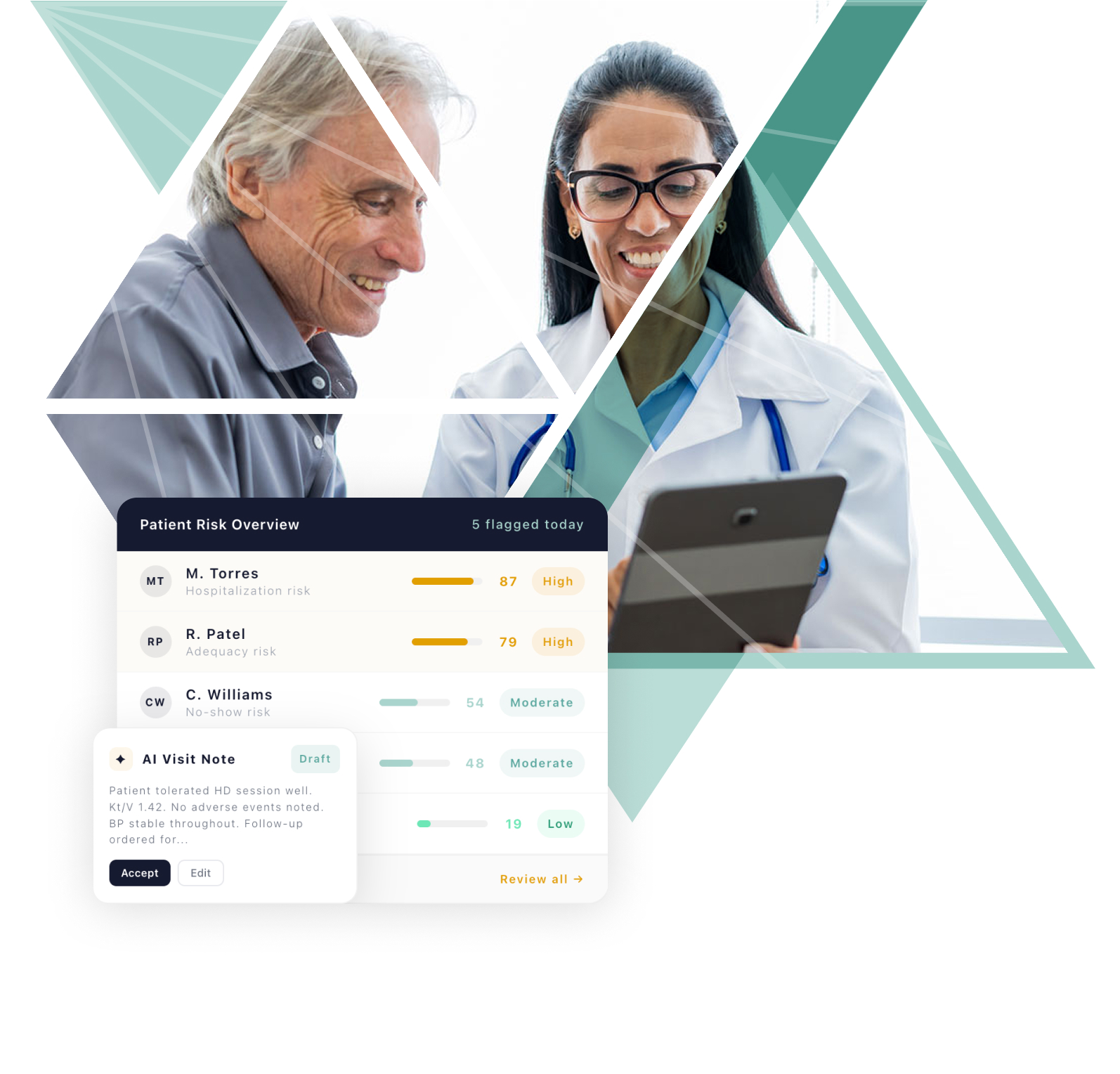
The goal is not just to label a patient high, medium, or low risk. Renvio helps teams understand the factors contributing to risk so they can respond with greater clarity and confidence.
When a risk is identified, teams can review the chart, update orders, document interventions, and track next steps within the same environment.z
Relevant data and risk signals are surfaced within the normal workflow, with less need for manual searching or report building.
AI-assisted documentation helps reduce administrative burden so more time can go toward patient care.
Instead of responding only after a problem becomes obvious, teams can act earlier with better visibility and a clearer path to intervention.
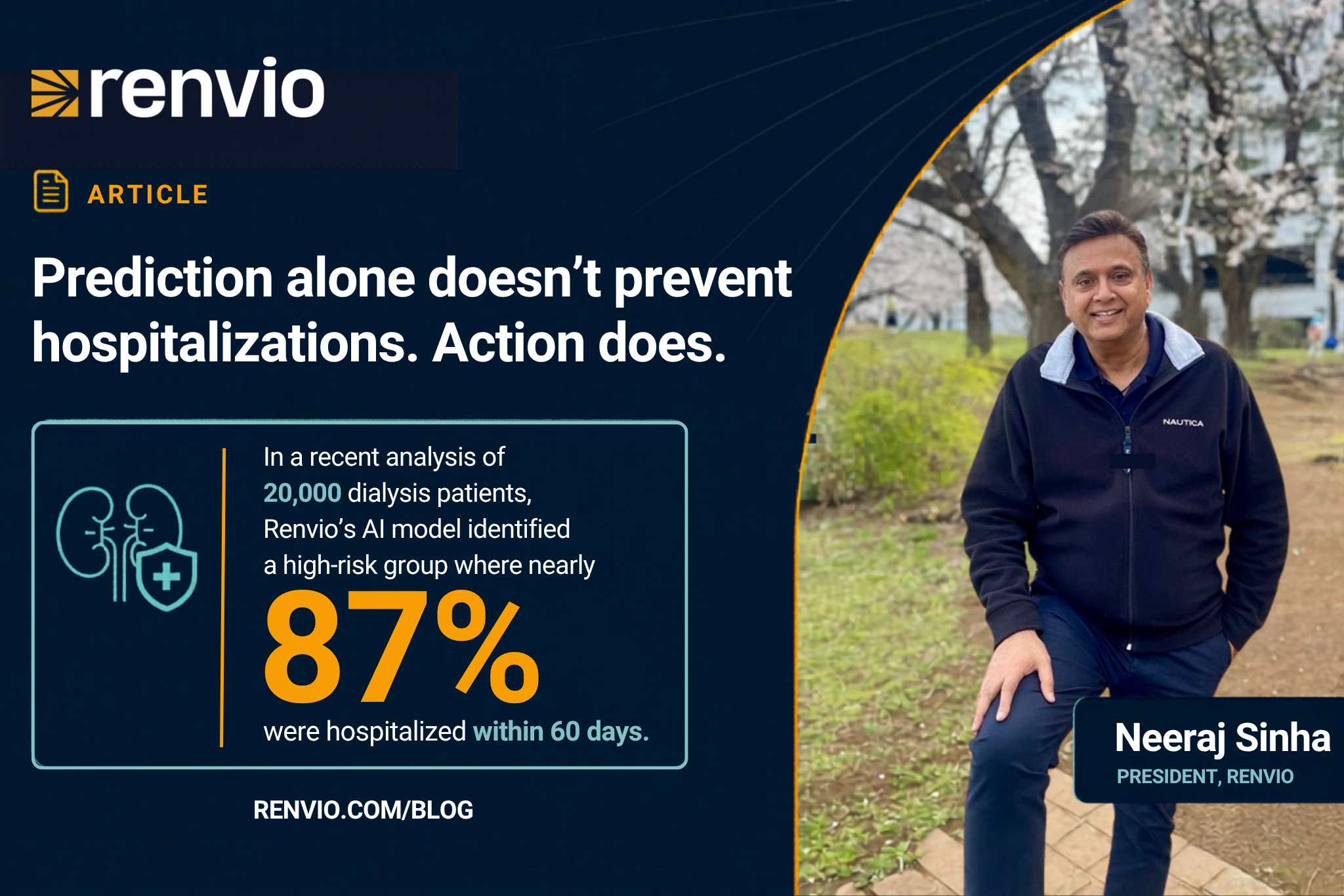
reduction in hospitalizations
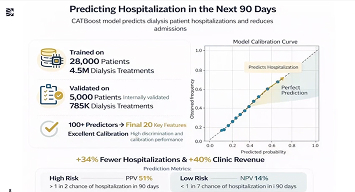
Earlier risk identification and structured intervention support help dialysis organizations reduce preventable hospitalizations and improve patient stability.